

Hello Everyone!
Welcome back to our #TLF blog. This semester has been quite a journey thus far. During this time, we have explored a range of topics that include the following:
Assessments and the Impact and Uses of Artificial Intelligence (AI)
Curbing Collusions in the Quiz Activity
Types of Educational Assessments
A Closer Look at Turnitin: Feedback and AI Detection
Constructive Alignment: Connecting Learning Outcomes to Assessments
As teaching ends for the semester this week, let’s explore some tips that would help both you bring closure to a course.
A – Tips to Bring Closure to a Course
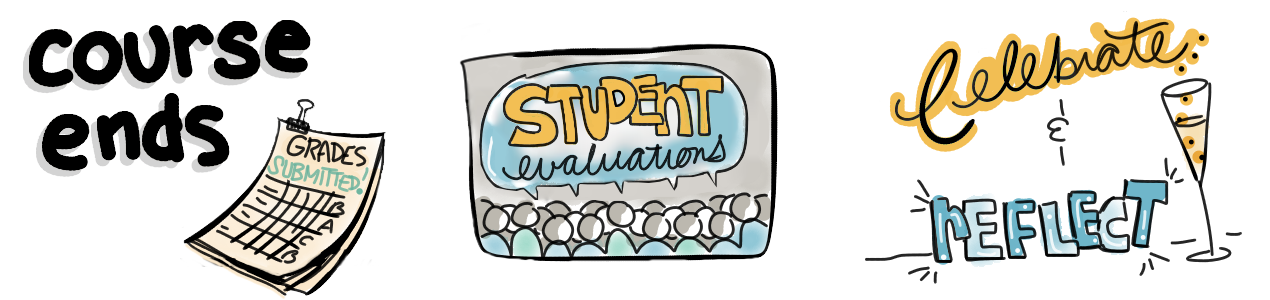
(Retrieved from: https://oer.royalroads.ca/moodle/mod/page/view.php?id=2520)
We often place great emphasis on commencing our courses, ensuring that we start right/strong. But the way we end a course (pedagogical closure) is just as important as the way we begin a course. While the beginning of a course creates the first impression on students, the way we end a course leaves the last/lasting impression and influences students’ take-aways from their entire course experiences.
The following are some tips that you can use to bring closure to a course while preparing your students for any follow-up activities such as end-of-term examinations and upcoming projects:
1. Reflect on learning: Ask students to reflect on their learning by summarizing key points, or what they’ll remember in the future. You can also ask students to fill out a reflection questionnaire/survey. A short journal reflection may also help in this regard.
2. Review course concepts: Review the most important course concepts and tie them into a few big picture themes, which may be accompanied with graphics or visuals. This differentiated or UDL approach may cater to the different types of learners in your course.
3. Ask thought-provoking questions: Ask students to agree or disagree with thought-provoking statements. You can also ask them to articulate their findings more critically, with justifications.
4. Encourage collaboration: Have students work in groups to co-create study guides, mind maps, or responses to course learning outcomes.
5. Share your takeaways: Share what you learned from your students. This makes you much more relatable to students, and they feel a sense of fulfillment when they can teach you something.
6. Remind students of remaining tasks: Remind students of any remaining assignments and/or tasks that may be outstanding or upcoming.
7. Play a game: Create a game where students compete to get the correct responses. You can use a tool like Poll Everywhere or make Jeopardy-style questions. This not only fosters collaboration and engagement, but also serves as a review exercise with enhanced retention.
8. Give students a direction: For graduate students, you can give them a direction to extend the influence of the course over their professional career.
B – The Importance and Benefits of Course Closure

(Retrieved from: https://rowdymclean.com/coasting-to-the-finish-line-means-you-are-likely-to-lose/)
Being intentional about wrapping up a course goes a long way. In addition to the aforementioned tips, a simple farewell gesture such as a class picture to commemorate the collective learning experience or posting a simple farewell note can have a more lasting impact on students. This impact can last throughout their subsequent careers and professional networks. Research has shown that this seemingly simple gesture goes a long way in providing students with motivation which is tantamount to their learning and academic performance. It also helps to strengthen your relationship with your students as they advance through other courses or life achievements. Here are some additional benefits of effective course closure:
1. Solidifies Learning: It acts as an opportunity to review central ideas, summarize key content, and solidify what students have learned, ensuring they take away lasting understanding. Closure allows students to synthesize and assimilate knowledge.
2. Creates Accomplishment: It helps students recognize their progress and achievements, offering a sense of accomplishment.
3. Reduces Apathy: It prevents abrupt, awkward endings that can leave students in a state of uncertainty or apathy.
4. Allows Reflection: It gives students space to reflect on how their journey in the class has changed them as learners.
5. Reduces Memory Loss: It reinforces learning, helping students remember material long-term.
6. Reduces Anxiety: Clear, effective closing—especially if a course is ending early—reduces student feelings of being in "limbo"
7. Feedback Mechanism: It serves as a final opportunity to check for understanding and collect feedback to improve future courses.
8. Builds Community: It provides a "good-bye" moment that recognizes the community built in the classroom. More specifically, closure offers a chance to recognize peer support and say goodbye, increasing the connection between faculty and students.
Providing (pedagogical) closure at the end of a session, module, or term is crucial for maximizing learning and providing psychological completion. Never leave your students dangling at the end of your course. Follow the previously mentioned tips to bring closure to your course.
We hope the aforementioned tips are helpful.
Should you need any further assistance, please feel free to contact us.


