Welcome once again to our Teaching and Learning in Focus (#TLF) Blog.
To help you and your students settle into this semester, or in case you missed any of our previous blog posts, you are invited to view some of the topics we previously explored via the following list:
Now that you are about to go into the mid-term (course assessment) phase of the semester, we would like to look at the importance of rubrics. Rubrics may assist you in designing your formal (graded) and informal (un-graded) assessment items, instruction, and grading practices.
A – What Are Rubrics?
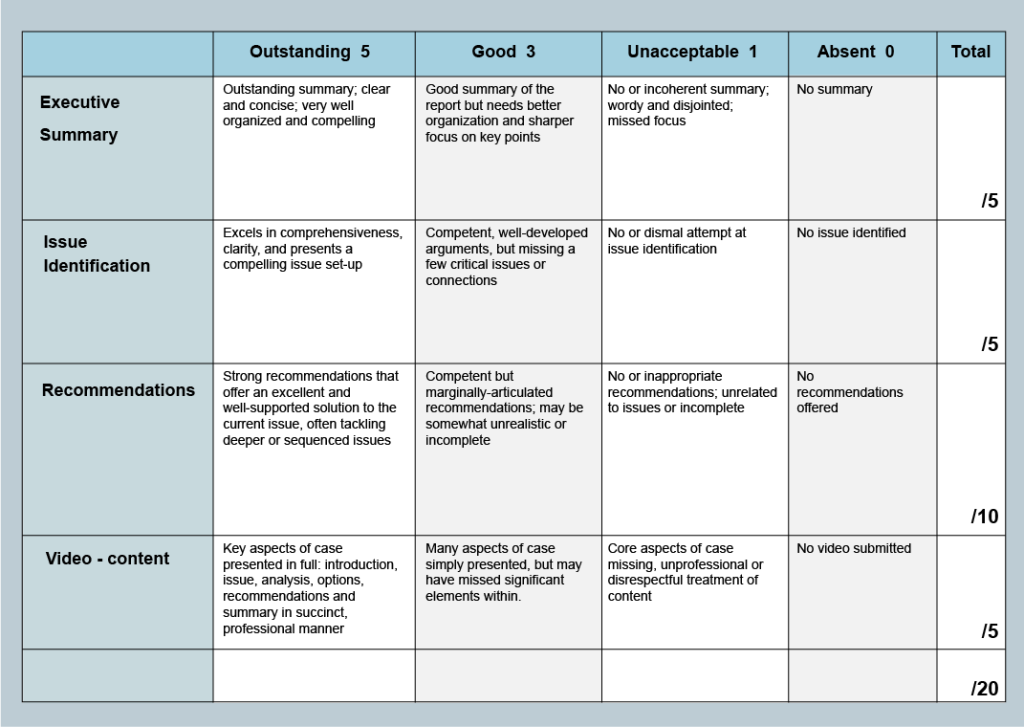
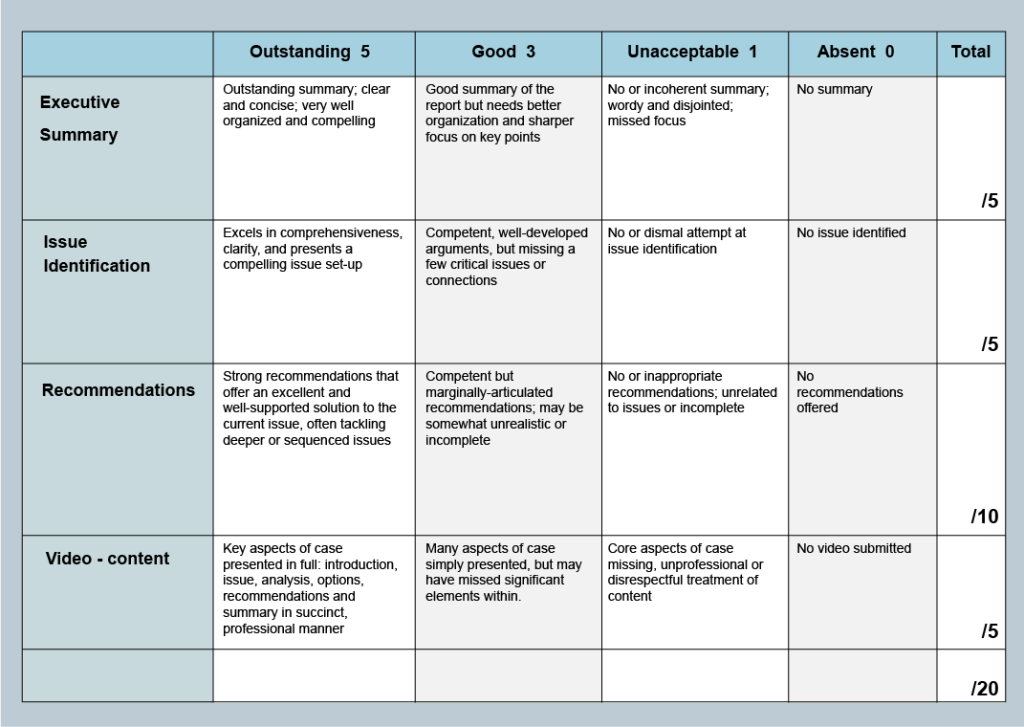
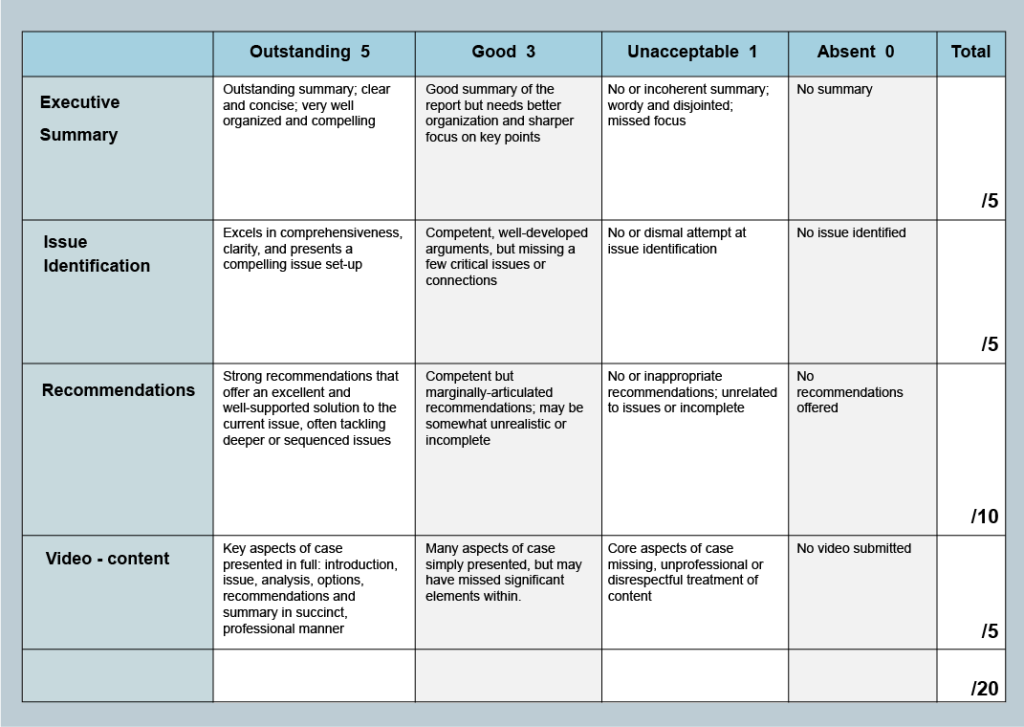
Rubrics are structured, evidence-based scoring instruments that are used for grading assessments more objectively. They add validity to assessment practices i.e. the same rubric can be used by different persons to assess the same item and the marks and/or feedback comments may not be substantively different. To that end, rubrics define clear criteria, expectations and performance levels for learners and the assessment items they submit. Rubrics allow for increased transparency, objectivity and, as previously mentioned, validity (consistency) in grading. Moreover, they help in the provision of detailed feedback to learners, identifying the strengths of their submissions, and ways they can be improved. For faculty, rubrics allow for faster grading and stronger alignment with learning outcomes.
B – The Types of Rubrics
A rubric serves as a guide in evaluating the quality of work, proficiency and learning (Popham, 1997). While the instrument, components and purpose for each rubric may vary substantively, there are some common features or components all rubrics possess. For example, all rubrics should include a set of criteria or characteristics (for rating of students’ performance/work), the degree of mastery (e.g. exemplary, proficient), and descriptors or explanations for each rating (Herman, 1992). There are many types of rubrics used in teaching and learning. Here are a few types, examples, and recommendations you may consider:
Analytic Rubrics:
Definition: Breaks down performance into multiple, measurable components or criteria; providing detailed feedback for complex assignments.
Recommendations: Best used for formal/graded assessments e.g. formative in-course assessments such as essays, research projects, presentations and portfolios.
Definition: Assesses a student's work as a whole rather than grading individual components separately. It provides a single, overall score. It is ideal for quick grading but is less detailed.
Recommendations: Best used for summative assessments or blind marking of large scale tests – but they do not allow for detailed feedback comments for the student’s improvement.
Description: Outlines criteria for proficiency. As such it emphasizes feedback more than grading.
Recommendations: Best used for instructional learning activities which are not graded e.g. a simulation, or game, a writing sample, diagnostic activities
Whether you are experienced or new to using rubrics in your course assessments, the following are some tips or best practices you may consider:
Alignment: Ensure that the criteria used in your rubrics align with the specific learning outcomes. This allows for connected ways of knowing and metacognition in students’ learning as the relevance of the assignment is made clear.
Simplicity: A rubric does not have to be a very complicated instrument. The simpler, the better. For clarity, you may consider having just about 3-6 criteria, and that the criteria-descriptions are void of any complex terms, jargon or language.
Student Involvement: Students can assist you in creating or amending of a rubric for their assessment submissions e.g. collaborating on a rubric for peer assessment. This increases students’ involvement and ownership in their learning.
D – Further Training in Building Assessment Rubrics – A CETL Workshop
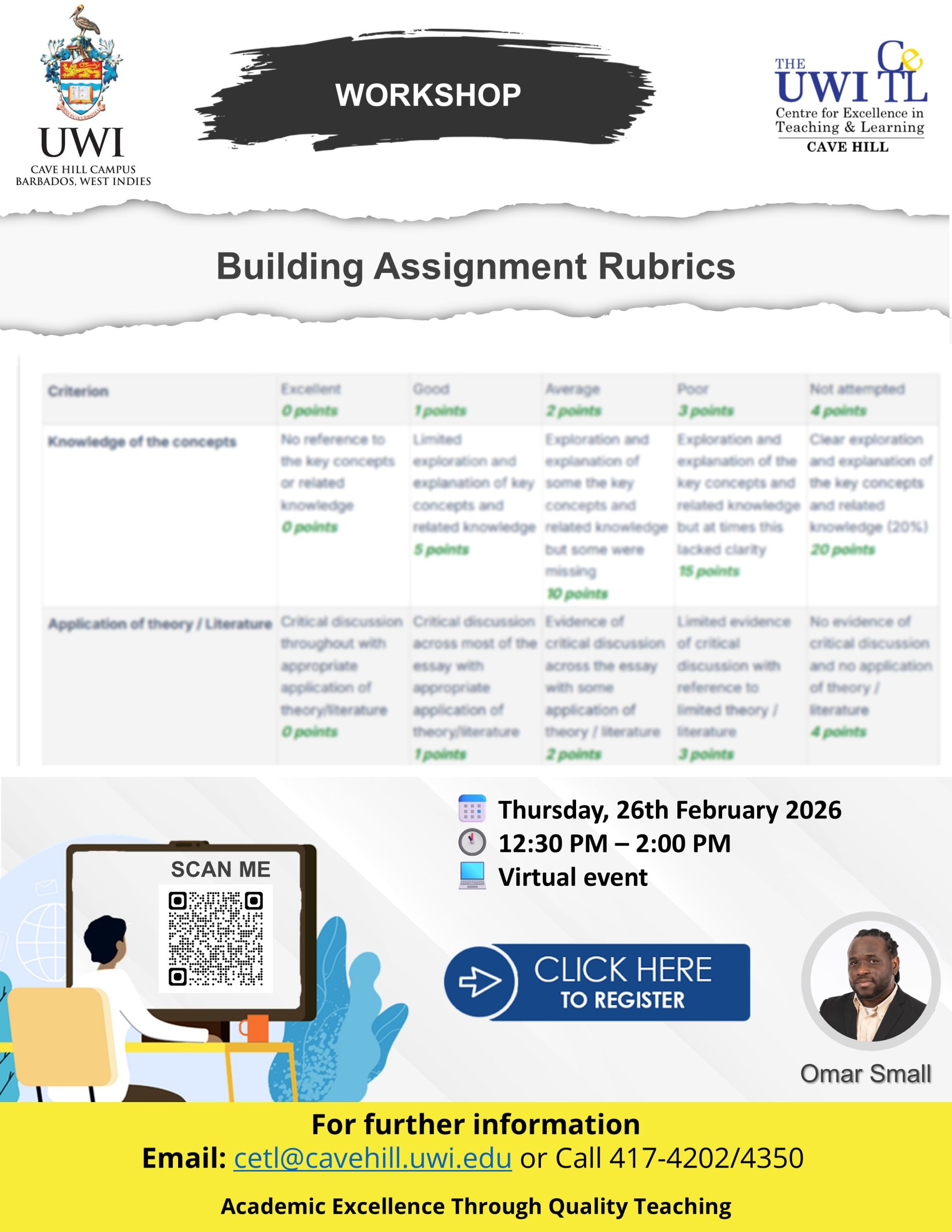
Are you interested in building an assignment rubric? The CETL warmly invites you to our upcoming workshop “Building Assignment Rubrics” on MyCaveHill eLearning. Grading and feedback are important components of the assessment cycle. Scheduled for Thursday 26th February, 2026 at 12:30 PM. This session is designed to help you save time, grade more consistently, and give students clearer feedback more conveniently through MyCaveHill eLearning. Whether you are new to rubrics or just want to refine what you already use, this workshop will give you practical tools you can apply immediately to your courses.
With the mid-term assessment phase of the semester fast approaching, we strongly encourage you to join this online session and take advantage of this opportunity to make assessments and feedback easier and more transparent for both you and your students.
By the end of this workshop, participants will be able to:
Create a rubric within a MyCaveHill eLearning assignment, including defining criteria, setting performance levels, and assigning point values.
Apply a rubric to student submissions within MyCaveHill eLearning’s grading interface.
Provide meaningful feedback using MyCaveHill eLearning’s rubric-based grading tools.
Use revised, imported or exported rubrics across courses and collaborative teaching contexts.
Examine the benefits of using rubrics in MyCaveHill eLearning assignments