

As the semester transitions to mid/in-course assessment phase this week, we will explore the necessary alignment between assessments and their learning outcomes. Learning outcomes provide the bedrock for all other elements in your courses including lesson topics, instructional activities and assessments.
A – What Are Learning Outcomes?
Learning outcomes (LOs) refer to the knowledge, skills, and even the attitudes your learners may develop as a result of participating in your course or lesson. More specifically, learning outcomes are statements indicating the end result for a learner following a course or learning activity. LOs specify the observable changes in behaviours following a learning experience/activity. As such, it is highly recommended that learning outcomes focus on:
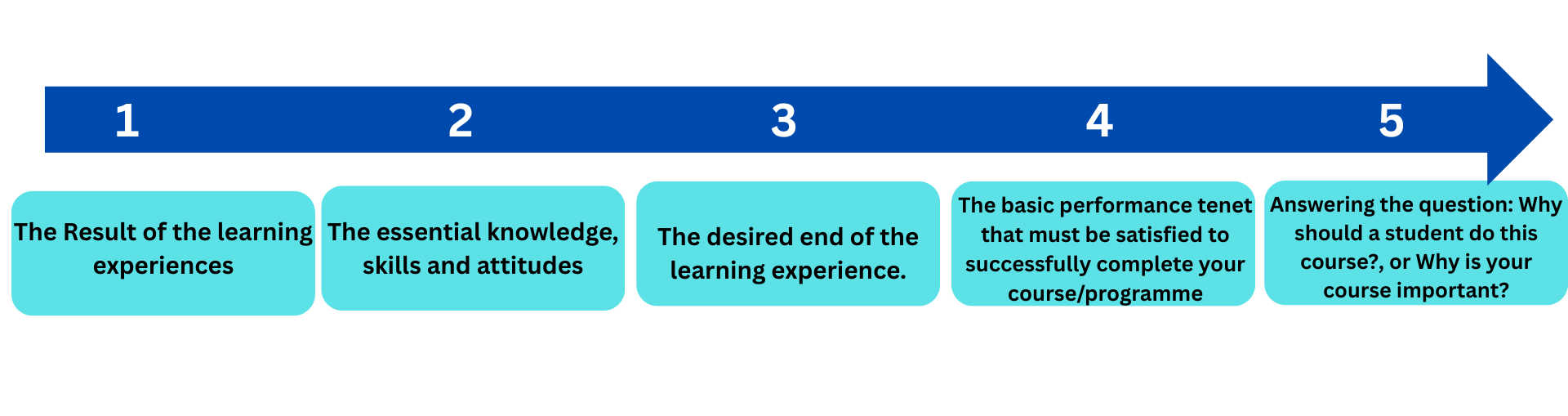
The inter-relationship between your lesson/course learning outcomes with relevant graded or ungraded earning activities/assessments is called alignment. This constructive alignment (Biggs, 1999), or connection among the different course elements (e.g. assessments, teaching methods, learning activities and learning outcomes), also allows you to develop and communicate the pathway for students’ engagement and learning progression. It enables you to explain what (prior) knowledge and skills were expected entering the course and the knowledge and skills that will be developed throughout/by the end of the course. In so doing, this process ensures that assessments/learning activities accurately measure what students are expected to learn, and thereby foster effective teaching and learning.
As seen in the following illustration, alignment can generally occur on a programme level, a course level, and a lesson or course module/topic/lesson level, thus impacting the topics, learning activities, learning materials and resources, and course assessments:
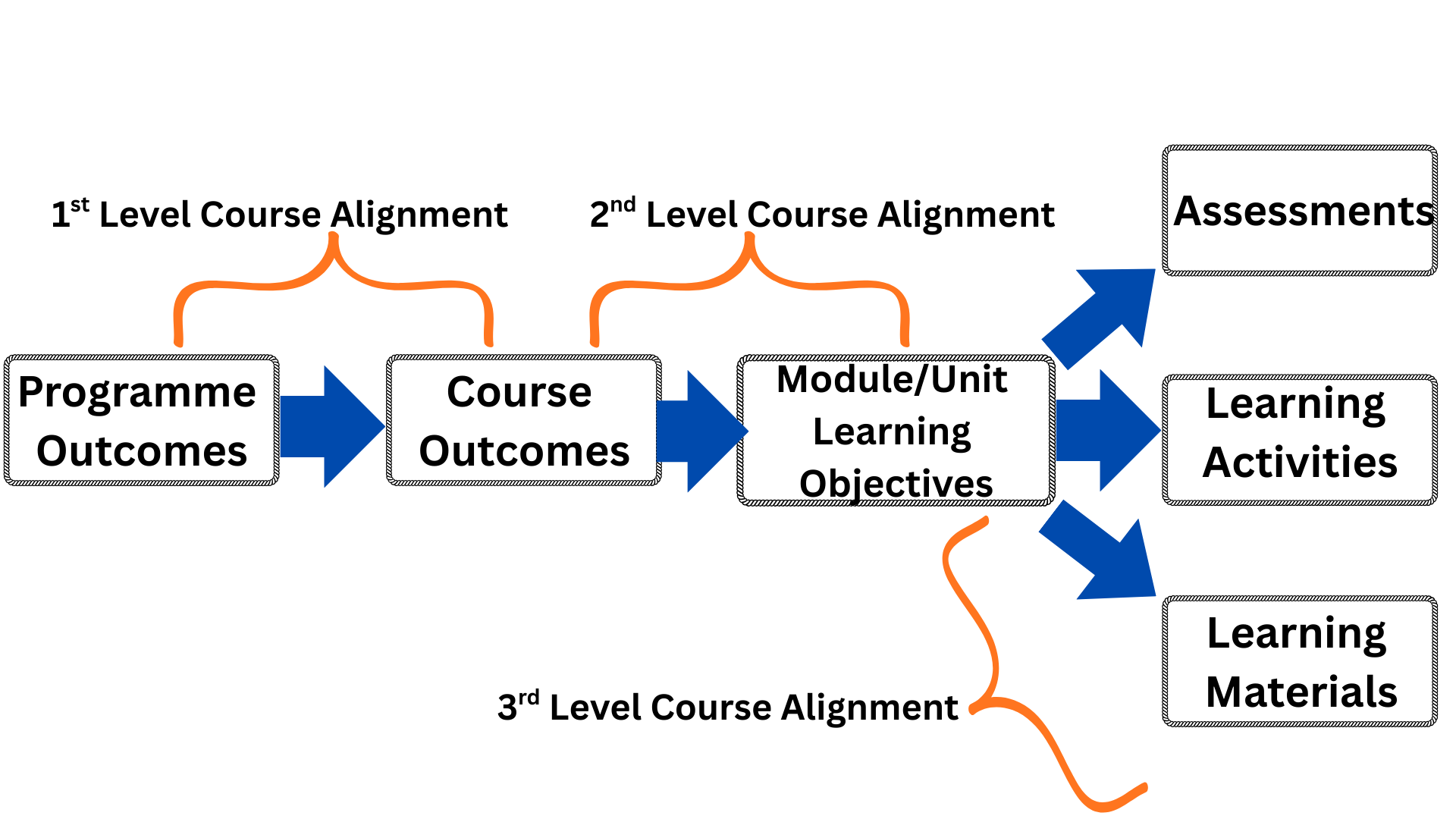
Alignment on all three levels ensures that alignment exist among the course assessments, learning activities, course learning objectives, and the overarching programme outcomes. At the course level, this may allow you to detect redundancy of course assessments (i.e. if multiple assessments are measuring the same learning objective(s)). As seen in the following illustration, constructive alignment on all three levels may indicate if all or some of the learning objectives are not addressed/measured. At the programme level, constructive alignment may also help you evaluate the necessity or relevance of a particular course in your overarching programme.
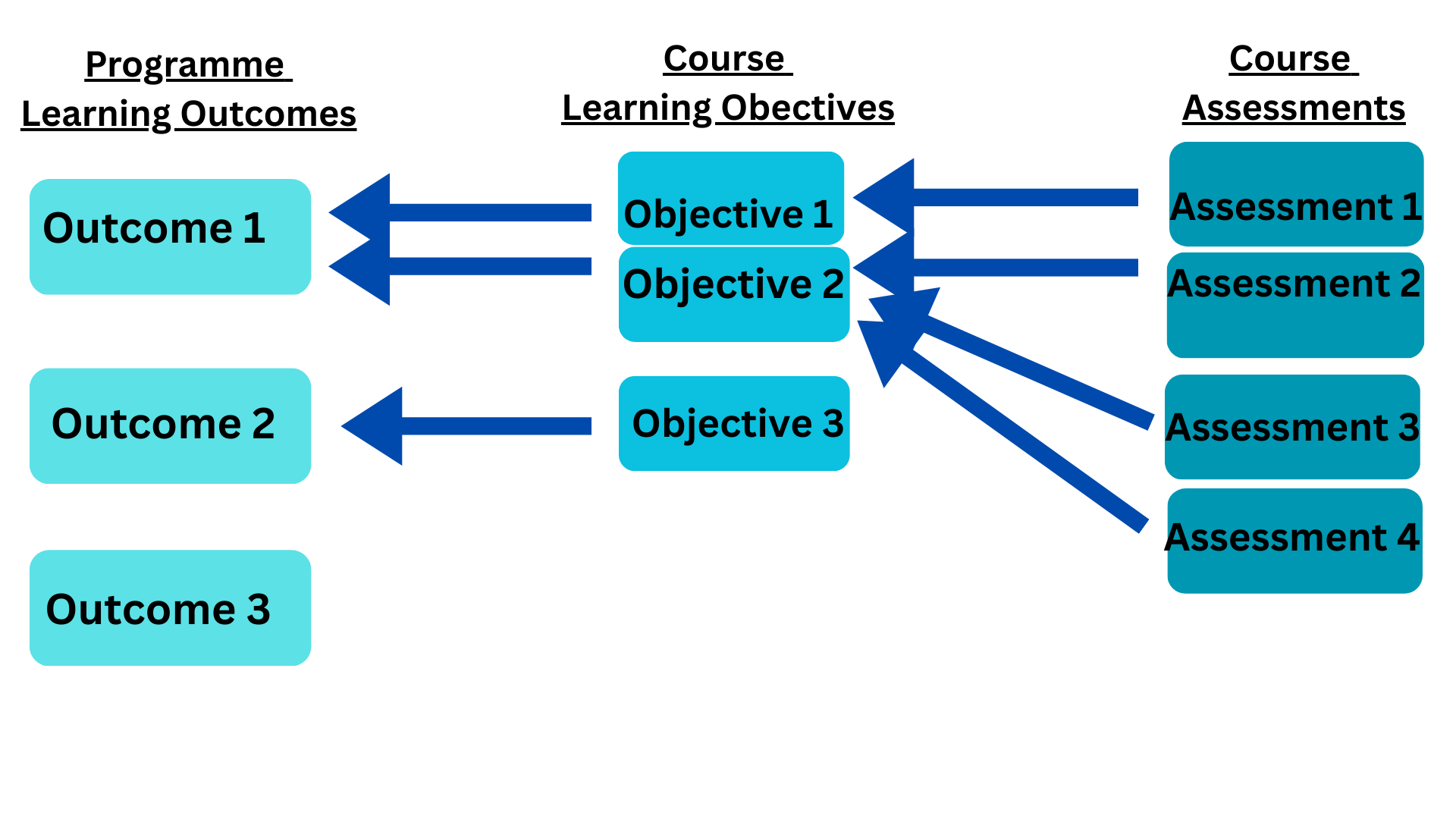
Here are a few tips you may consider to achieve constructive alignment in your programmes, courses and assessments:
1.Define Learning Outcomes:
Before designing assessments/learning activities, clearly articulate the intended learning outcomes, or what students should know, feel, and be able to do upon completion of a course or unit. In other words, consider: “What is the whole point of the assessment or learning activity?”Start with the “Why”
Be Specific and Measurable – Learning outcomes should be specific, measurable, achievable, relevant, and time-bound (SMART). For example, instead of “Students will understand photosynthesis,” (which is vague and too abstract to be measurable), try “Students will be able to explain the process of photosynthesis, including the inputs, outputs, and importance of the process in a 3-minute presentation”.
2.Design Activities/Assessments:
Match Activities/Assessments to Outcomes – The learning activities or assessment methods (tests, essays, projects, presentations, etc.) should directly align with the learning outcomes.
Consider Different Types of Assessment – Use a variety of activities/assessment methods to evaluate different aspects of learning, such as knowledge, comprehension, application, and critical thinking. To this end, you may consider more alternative forms of assessments i.e. assessments/activities that go beyond a Multiple Choice Exam #MCQ but may include a reflective journal, an ePortfolio, coordinating an event/initiative, implementing a solution to a problem.
Develop Clear Rubrics – Create rubrics or scoring guidelines that outline the criteria for assessing student performance and ensure consistent evaluation.
3.Evaluating Student Performance:
Analyze Results – After administering assessments, analyze the results to determine if students have met the learning outcomes.
Provide Feedback – Use assessment results to provide students with feedback on their strengths and areas for improvement.
Reflect and Revise – Reflect on the effectiveness of the assessments and make adjustments as needed to improve future instruction and assessment.
We hope the aforementioned tips and resources are helpful to you.
Should you need any further assistance, please feel free to contact us.


