The University of the West Indies
HIV/AIDS Response Programme (UWIHARP)

Educating Minds, Empowering Choices, Encouraging Accountability: Safeguarding a Safer Sexual Future

UWIHARP’s Work

Sexual health departments at universities are crucial for cultivating a healthy, knowledgeable, and supportive campus environment. At The University of the West Indies, Cave Hill Campus, this department is The UWI HIV/AIDS Response Programme (UWIHARP), which is central to promoting the sexual health awareness and safety of students.UWIHARP provides comprehensive education to empower students to make informed decisions about their sexual and reproductive health (SRH). We help students’ overall health  and academic success by creating and implementing awareness and advocacy programmes that aim to reduce gender related stigmas, end discrimination, promote healthy relationships, and ensure that young people can easily access the medical care and support they need.

Additionally, we collaborate with other campus services to offer a holistic approach to student wellness, addressing the intersections of sexual health with mental health, substance misuse, and violence prevention. UWIHARP further advocates for the diverse needs of students, including contraception, STI prevention, sexual consent education, and support for LGBTQ+ individuals. By fostering a safe and accessible environment, we play a role in reducing the rates of STIs, unintended pregnancies, and sexual violence on campus.

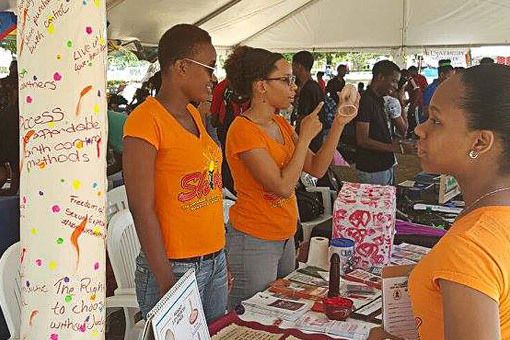
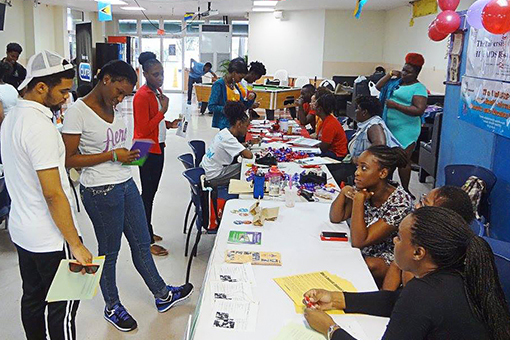
Education is the foundation of UWIHARP’s work, and we coordinate a number of sexual health literacy efforts, including education and awareness drives, information booths, tailored workshops, seminars, online discussions, and podcasts on a range of SRH topics. UWIHARP also creates and delivers casual and engaging, peer-based sexual health courses to engage students in practical learning experiences. UWIHARP conducts research on sexual culture and health trends, behaviours, and interventions. We further promote evidence-based policies and practices that benefit both the campus and the wider community through collaboration with academic departments and external groups. UWIHARP’s priority areas therefore include SRH education and awareness, advocacy and outreach, and research.
Follow us for updates on upcoming events:

Vision

UWIHARP envisions a Caribbean where the quality of life is elevated through the advancement of sexual and reproductive health and rights, achieved by fostering innovative, multi-sectoral collaboration.


Mission

UWIHARP is committed to advancing equitable and sustainable universal health and wellbeing by promoting sexual and reproductive health and rights through interdisciplinary research, education, training, outreach, and technical support.

Projects, Services and Upcoming Events

Education

  • We host a series of casual, stimulating, in-person, interactive talks called, The Sexual Health Awareness Chat Rooms (SHAC). Check our social media pages for future sessions. Join us!
  • We offer exciting and dynamic peer-based outreach courses. Ask us!
  • We curate wide-ranging, informal, sexual health awareness talks, called ‘Digital Dialogues’ on our social media platforms. View them!
    • The S-Files- Sexual Health Discussions
    • The Sexual Health Online Conversations about COVID-19 (SHOCC)
    • The Sexual Health Awareness Zone! (SHAZ!) Podcasts

Advocacy

  • We run social action campaigns to reduce stigma around sexual health and gender issues, promote healthy behaviours, and encourage respectful and consensual relationships. Track us!
  • We recruit and sensitise student volunteers to become change agents who provide accurate information to their peers in the innovative Sexual Health Action Programme (SHAPE). Local students could gain service hours for the national ‘Give Back’ programme. Lookout for updates on our social media sites. Sign up!
Sexual Health Screening Image

Sexual Health Screening

  • ‘STI Testing’- we collaborate with the student clinic and local health ministry to provide free, confidential, student-friendly services. Book your appointment!
  • ‘Breast Screening Drive’- we join forces with the Barbados Cancer Society to offer manual breast health awareness and checks using their mobile unit. The first 20 students are free. Follow our social media sites for dates and locations. Come early!
  • We provide free condoms for all students through the student clinic. Help yourself!
Sexual Health Screening Image

Research

  • We conduct sexual and reproductive health and human rights studies to shape our courses, policies and programmes. Tune into our social media sites for details. Participate and win service hours and educational tokens!


Safe(r) Sex Tips for UWI Students

University life encourages self-discovery and newfound independence for young adults, where sexual exploration and relationships become part of the experience. Although exciting, students should prioritise their wellbeing and follow measures to safeguard themselves and their partners. Sexual activity incurs varying degrees of risk, and safer sex tips reduce chances of unintended pregnancies and sexually transmitted infections (STIs), etc. This involves using protective measures and making informed sexual decisions. Practicing safer sex empowers individuals to take control of their sexual health, which reduces the likelihood of long-term consequences, and fosters responsibility. Methods include:
 
  •  Consent & Communication: Open communication with sexual partners is crucial, and obtaining explicit consent before any sexual activity is essential. Consent should be certain and continuous throughout the encounter.  Always respect partners’ sexual boundaries and discuss your own.
  • Substance Use: Alcohol and drugs impair judgment, and compromise rational decision making about sex. Engaging in sexual activity while under the influence increases likelihood of risky behaviours, unprotected sex, band hinders your ability to give or receive clear consent.
  •  Health checks: Sexually active students should receive regular STI testing and other sexual health examinations, as many infections do not show any signs. This ensures early detection and treatment if necessary, which reduces the risk of complications and spread.
  • Condoms: Use condoms consistently and correctly every time. They provide excellent protection against STIs.
  • Contraception: Use reliable methods of contraception to prevent unintended pregnancies. Speak to your healthcare provider to discuss the best option for you.