Tricia Jones
Book Review
Title : Am I Not A Man And A Brother?
British Missions and Slavery in West Africa 1786 -1838
Author: Stiv Jakobsson
Publication Date: 1972
About The Title
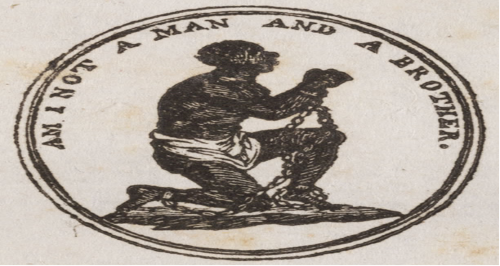
The title Am I not a man and a brother is a really interesting title. It makes the reader stop, and think. Why?
Why black people were treated the way they were?
Were they not humans as well?
Were they not considered a person?
Were they not someone’s brother?
Was I not a man because of the colour of my skin??
The Content
This book speaks about religion, politics, missions, slavery, education etc., but the main focus is the abolition of slavery.
Religion taught the slaves that they were all God’s creations and so are equal before God but it also informed them that they should accept their current situation and they will be rewarded later on in Heaven.
In relation to politics new laws were created whenever the slave owners felt uncomfortable about the activities their slaves were becoming involved in. The law enforcers worked hand in hand with the slave owners to eliminate all sources the slaves had to try to educate themselves such as going to church and associating themselves with the missionaries.
The missionaries’ mission was to educate the slaves and abolish the slave trade one way or another. Education was an important factor to achieve this objective. Each topic either helps to achieve or creates an obstacle to the author’s main focus.
The book is written like it is a story book. All of the different incidents take place in different places and different stories with basically the same incidents occurring in West Africa and the West Indies. Some of the stories also took place in Britain, Jamaica, Barbados, etc. The author speaks in detail about what the slaves faced on a daily basis. He gives the reader a clear insight into what happened to slaves in the past. When I reads the author’s words, a clear picture is painted in my mind and it feels as if I am in that gruesome time.
The author spoke about slaves who were beaten for going to church and taking other slaves along on Sundays, the day that was alleged given to them to do what they wanted.
He also spoke about how missionaries taught the slaves to read, write and count. They were also taught about the Bible, mainly how it described “human creatures as god’s creation and so are brother equal before God.” This made the slaves think about themselves and how they were being treated. Hence the rebellion of the slaves towards the slave owners. Some slaves fought, some ran away and others simply refused to do what they were told. These actions resulted in harsh punishments because rebellion could not work only coming from a few. They needed to become educated and unite to fight against slavery and this is where the missionaries played a crucial role.
Religion was also a main topic. It seems as if every chapter spoke about a pastor preaching to the slaves, but the slave owners just kept creating new laws to stop slaves from learning about religion. Many preachers on the other hand were punished either by beatings, imprisonment or charges. However the preachers were determined and found new ways to get their message out. The slave owners were beginning to feel insecure. An example would be Hamiliton Brown who was one of the magistrates who was against licensing the house of Ocho Rios to allow Gimsdall to preach. His opinion stated that 11 disturbances recorded in England and Jamaica were caused by Methodist and that he would not allow his slaves to attend the Methodist chapels, for the Methodist could not be friends to the Jamaican and all who befriended them were enemies to Jamaica.
The Appearance
This book has an orange hard cover. It appears as if it was made by a machine, the paper is smooth with medium size letters which are easy to read. On the cover there is a picture of a man inside of a coin on his knees. He is kneeling and it seems as if he is either praying or pleading. However this picture goes really well with the title of the book because it looks like he is asking the question Am I Not A Man And A Brother?
There are maps at the back of the book displaying West Africa, the West Indies, Jamaica etc. There is also a map of the West African Mission Field in the 1790s and 1810s. This map maybe identifying where the missionaries where doing their work.
My Opinion
My favourite part of the book was at the very end. After the abolition of slavery and black people were no longer considered property but people in a legal sense.
This book was a very emotional book to read. The stories about how the slaves were being punished, misused, abused and looked down on would leave a reader angry. But finally, in the end it was abolished and noted that all human beings are born free and equal in dignity and rights.