Tannika Barker Book Review
Compensated Emancipation was a method of ending slavery in countries where slavery was legal. A lot of people may not know but there is an actual book called
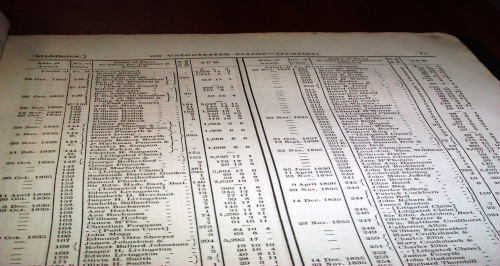
Accounts of Slave Compensation Claims. The author of the book is Great Britain Parliament, House of Commons. This book was ordered by The House of Commons, to be printed, 16 March 1838. The compensation to slave owners was paid to the colonies of Jamaica, Antigua, Honduras, St. Christopher’s, Grenada, Dominica, Nevis, Virgin Islands, St. Lucia, British Guiana, Montserrat, Bermuda, Bahamas, Tobago, St. Vincent’s, Trinidad, Barbadoes, Mauritius, Cape of Good Hope. This involved the person who was recognized as the owner of a slave being compensated monetarily for releasing the slave. The Slave Compensation Act 1837 was an Act of Parliament in the United Kingdom, signed into law on 6 December, 1837. According (Great Britain Parliament, 1838) “An account of all Sums of Money awarded by the Commissioners of Slavery Compensation; specifying the Date of each Order, the Parties to whom the Payment is awarded, and the colony or settlement in respect of which it is awarded, and the Number of slaves for who each such Payment is awarded on Uncontested Claims.”
This book is organised by colony, or for Jamaica by parish. According to (Hadley, 2015) “The parliamentary
return shows the name of the person awarded compensation, the number of enslaved people for which the award was made, the date of the award, the amount of the award in pounds, shillings and pence, and the unique Claim Number within the colony in which the enslaved people covered by the award were registered. No names are given for the enslaved in this source.” There are four different lists for each colony: uncontested claims; contested claims, where two or more people claimed the same compensation; Chancery cases, where the award was paid into court in Great Britain until a lawsuit affecting the ownership of the enslaved was resolved; and list E cases, where the award was paid into court in the colonies until, again, a lawsuit affecting ownership of the enslaved was resolved. Throughout most of the book I saw Litigated Claim appearing and no awards were given where this appears. Litigated Claim is when someone made a lawsuit case, to be decided and settled in the court of law. This book is not printed in order of any such, not by colony, not by date and certainly not by name. As a matter of fact, how some of the countries names are spelt in this book says a lot to the reader for example Barbados is spelt ‘Barbadoes’ and Guyana ‘British Guiana’. This says to us as a reader that as some of these countries gained their independence, they also sought to change their names as a means of breaking away from slavery. In some cases it is just the old English spelling for the name in the case of Barbadoes. In the case of British Guiana, the name was changed at independence to Guyana.