

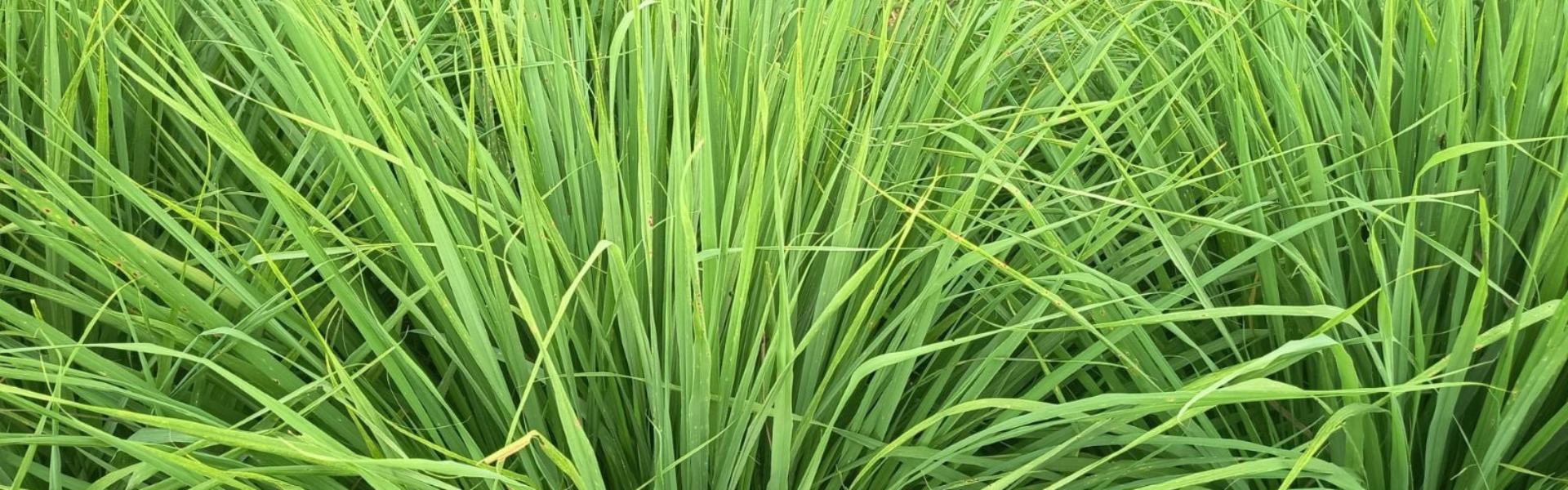
Lemongrass is widely recognised for its refreshing fragrance and its use in teas and essential oils. However, emerging research by graduate student Tamaira Rowe reveals that this familiar plant may hold greater promise for sustainability, renewable energy, and economic development across the Caribbean.
As part of her MPhil in Environmental Studies, Rowe’s research investigates how lemongrass can be integrated into a circular system that produces essential oil, renewable fuel, and biofertiliser, while generating minimal waste.
The study focuses on what happens after essential oil extraction.
From By-Product to Resource
“In the Caribbean, we often grow and use lemongrass but after extracting the oil, the leftover material is usually discarded. At the heart of this work was a simple question: what if nothing had to be wasted and could be converted to useful products?” she said.
Rowe’s work seeks to find out how this organic residue can be repurposed through anaerobic digestion, a process in which microorganisms break down organic matter in the absence of oxygen.
This produces biogas, a renewable energy source that can serve as an alternative to conventional cooking gas and other fossil-based fuels. By converting waste into energy, the system contributes to energy diversification in addition to reducing environmental impact.
Creating a Circular System
Beyond energy production, the research highlights an additional benefit. The by-product of anaerobic digestion is a nutrient-rich biofertiliser. This material can be reused to cultivate more lemongrass, effectively closing the loop and creating a self-sustaining cycle. In this system, little to no material is wasted, demonstrating how agricultural by-products can be transformed into multiple high-value outputs.
This circular approach exemplifies a shift from linear waste models to more sustainable, regenerative practices.
Implications for the Caribbean
The findings are particularly relevant for small island developing states such as Barbados, where there is a growing emphasis on renewable energy, sustainable agriculture, and reduced dependence on imported fuels and fertilisers.
Such systems could potentially strengthen energy security; lower the cost of agricultural inputs; create new entrepreneurial opportunities, and contribute to national sustainability and renewable energy targets.
A Model for Sustainable Innovation
Ultimately, this research demonstrates how innovative thinking and applied science can transform familiar, locally available resources into integrated, sustainable solutions. By leveraging the full potential of lemongrass, the Caribbean can move closer to achieving environmental resilience, economic growth, and long-term sustainable development.


