

The University of the West Indies (UWI) at Cave Hill has received international recognition for its readiness to engage in meaningful academic-industry partnerships.
A team of UWI researchers, working alongside Barbados Dairy Industries Limited, received an international award for developing a framework that helps transform research and innovation into industry applications.
Dr. Kim Quimby, on behalf of co‑authors Professor Clive Landis, Professor Winston Moore, Dr. Dion Greenidge and Eden Augustus from The UWI, as well as representatives of the company Khadija Marshall and Shafia London, was presented with the Industry–Academia Engagement Award at the 8th Research and Innovation Forum, held in Athens, Greece.
Ongoing academic-industry partnership
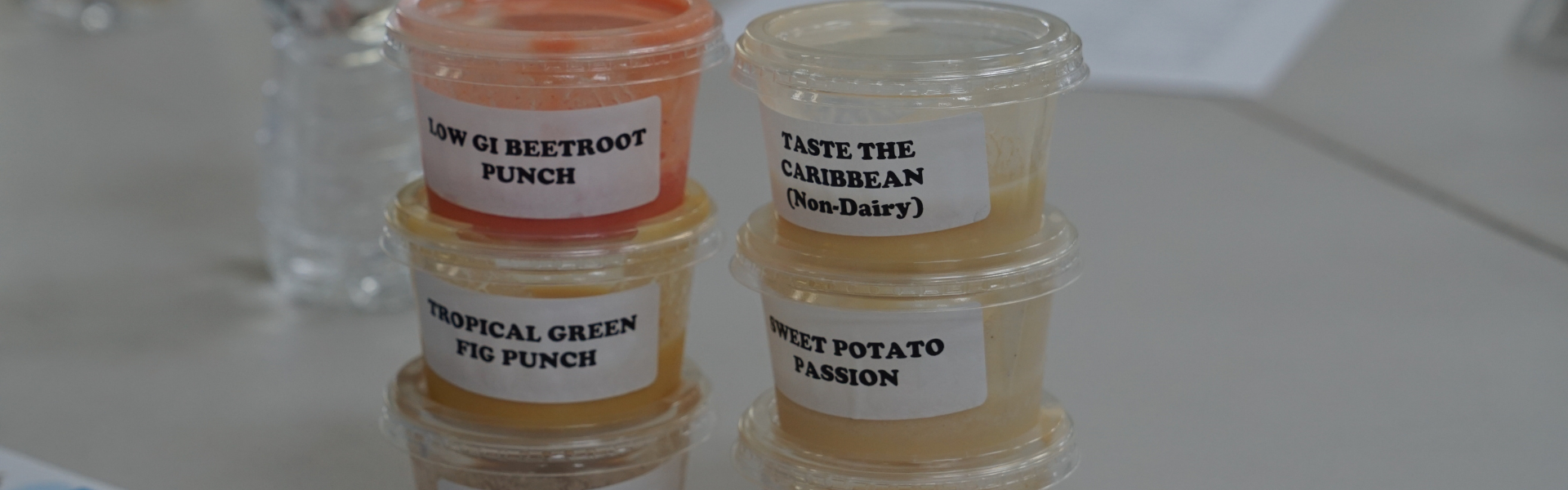
This work stems from an ongoing academic-industry partnership focused on the development of low‑calorie meal replacement shakes for diabetes. Co-conceptualised by Dr. Quimby, the product is intended to help address the growing diabetes challenge in the Caribbean, a condition associated with high morbidity and increased mortality. Recent population studies indicate that diabetes affects approximately 20 per cent of the Barbadian population, while overweight and obesity prevalence stands at nearly 66 per cent.
Last year, the Campus signed a licensing and distribution agreement with Barbados Dairy Industries Limited to facilitate production of the shake, which will feature indigenous Caribbean flavours derived from local tubers and fruits. Work on the shake has been progressing behind the scenes.
The award‑winning paper, Conceptualisation of the Innovation to Industry (I2I) Framework to Facilitate Commercialisation in Universities, authored by Dr. Quimby and her colleagues extended beyond product development, and focused on proposing a structured framework to strengthen collaboration between academia and industry.
“The shakes themselves were not the only focus,” explained Dr. Quimby, a senior lecturer in Immunology at the George Alleyne Chronic Disease Research Centre. “What was new about this work was the effort to develop a framework that encourages and enhances the relationship between academia and industry.”
She described the award as both surprising and encouraging given that her academic background is primarily in medical research.
“This was my first venture into a forum heavily focused on business, technology, and innovation,” she said. “I was one of only a few participants from the health sciences, so to receive an award on my first entry was unexpected, but very gratifying.”
Global stage
Dr. Quimby added that the recognition places The UWI on the global stage, and demonstrates the University’s readiness and capacity to engage in academic commercialisation.
“While we may not yet have a formal technology‑transfer office, we have the expertise and products in the pipeline. This award signals that UWI is serious and capable of engaging in meaningful academic–industry partnerships.”
Referencing comments made by Vice‑Chancellor Professor Sir Hilary Beckles at a recent Campus Council meeting, Dr. Quimby emphasised the importance of consistent and strategic collaboration.
“If we are to prosper economically, we must be deliberate and sustained in our academic–industry partnerships,” she said. “This work supports a framework that enhances how industry and academia can work together more effectively.”
Dr. Quimby also revealed that several additional products are currently in development.
“Our next step is to identify suitable partners to bring these products to market,” she said. “At the same time, we want to foster a broader culture of innovation and commercialisation within academia, rather than responding on a case‑by‑case basis. That cultural shift is where much of my focus will be going forward.”


