

UWI scientist warns climate shifts could worsen hantavirus risk
June 3, 2026
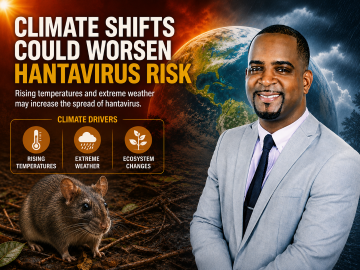
As the world watched the deadly hantavirus outbreak unfold on a cruise ship, with approximately a dozen cases and three deaths reported, a Caribbean scientist has stepped into the global spotlight, warning that the real story goes far beyond a single vessel.
Senior scientist at The University of the West Indies, Cave Hill Campus, Dr. Kirk Douglas is bringing a critical Caribbean perspective to the unfolding situation by showing how climate change could be quietly increasing the risk of dangerous viral outbreaks like this one.
Dr. Douglas, Director of the Centre for Biosecurity Studies, has spent years studying hantaviruses, diseases typically spread by rodents, and how environmental change is reshaping their behaviour.
His research, including a 2021 systematic review on hantavirus and climate change, is now gaining international attention through platforms such as the HEATED podcast, “Hantavirus is a climate story,” and coverage by climate news outlet Grist.
At the centre of his warning is a simple but unsettling truth that the conditions which drive climate change can also drive disease risk.
Hantaviruses are primarily rodent-borne. People are usually infected through contact with rodent urine, droppings, saliva or contaminated dust, often in enclosed or poorly ventilated spaces.
Dr. Douglas said what determines where rodents live, and how often they cross paths with humans, is increasingly being shaped by the climate.
The scientist said extreme weather patterns such as drought, flooding and shifting rainfall are altering rodent habitats and behaviour. During droughts, rodents may move closer to homes and workplaces in search of food and water. When rains return, vegetation growth can fuel sudden population surges, increasing the likelihood of human exposure.
Against the backdrop of a global outbreak, his message is strikingly calm, but urgent.
“This is not about panic. It is about preparedness,” Dr. Douglas said and stressed that climate resilience must include disease surveillance.
That message carries particular weight in Barbados and the wider Caribbean, where economies depend heavily on tourism and the constant flow of people through ports, conditions that can amplify exposure risks if systems are not in place.
“Climate-sensitive disease risks do not emerge in isolation,” he said. “They sit at the intersection of land use, waste management, housing, food systems, tourism, occupational exposure, disaster preparedness, and human behaviour.”
To address this, the centre director is calling for a One Health approach, a coordinated system that brings together public health, environmental management, animal health, tourism, and disaster response agencies to detect risks early and act before outbreaks take hold.
The warning is particularly relevant given how hantavirus infections can escalate rapidly. Symptoms, which can appear one to eight weeks after exposure, often begin with fever, headache and muscle pain, before potentially progressing to breathing difficulties, fluid in the lungs, shock, or even organ failure in severe cases.
While such outcomes remain rare, Dr. Douglas believes the real test lies in what happens before they occur.
With climate variability expected to intensify across the Caribbean, he said the region must improve rodent monitoring, early warning systems, and public awareness.


