
The work of researchers from The University of the West Indies (UWI), Cave Hill Campus was featured at the second annual Research Frontiers Symposium, held on 4–5 June 2026 at the Hilton Barbados Resort.
Hosted by the Fisheries Division and the Coastal Zone Management Unit (CZMU), the two-day symposium formed part of Barbados’ Environment Month activities and provided a collaborative platform for showcasing research and innovation that support the sustainable blue and green economies.
Among the presentations was a collaborative research project on antimicrobial resistance (AMR) being undertaken by Dr. Thea Scantlebury-Manning and Dr. Kelly Brathwaite of the Department of Biological and Chemical Sciences, Faculty of Science and Technology, in partnership with the Environmental Protection Department (EPD) of the Ministry of Health and Wellness.
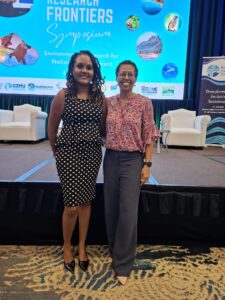
Representing the research team, Dr. Brathwaite delivered a presentation entitled ‘Environmental Drivers of Antimicrobial Resistance in Barbados’, which highlighted the project’s efforts to identify and assess environmental factors that may contribute to the development and spread of antimicrobial resistance within the island.

Using a One Health approach, the study examines the role of antimicrobials, heavy metals, biocides and disinfectants in environmental systems, while also exploring the pathways through which antimicrobial resistance may emerge and spread among humans, animals and the environment.
During her presentation, Dr. Brathwaite discussed existing evidence of environmental AMR in Barbados, drawing on findings from national studies and international surveillance initiatives. She also outlined ongoing efforts to develop an inventory of key environmental AMR drivers and their sources. The research is expected to provide valuable information to support future environmental surveillance, risk assessment and policy development related to antimicrobial resistance.

The project reflects the continued collaboration between UWI researchers and national stakeholders to address emerging environmental and public health challenges through scientific research and evidence-based decision-making.


