
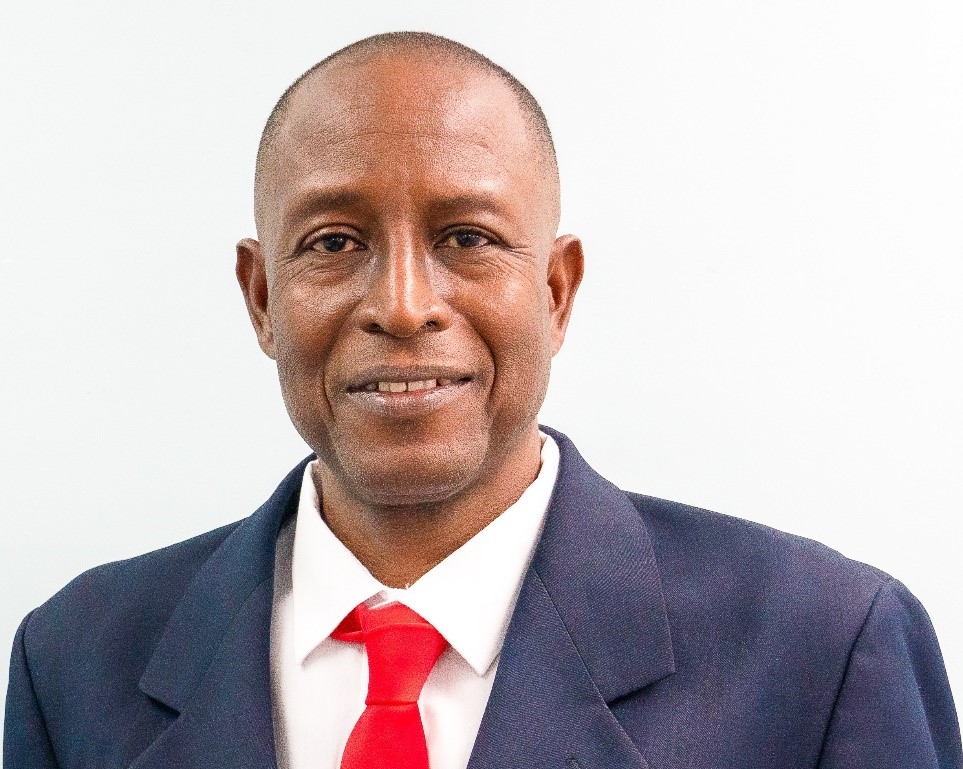
Dr. Thomas Edward, a Lecturer in the Department of Computer Science, Mathematics and Physics (CMP) at The University of the West Indies (UWI), Cave Hill Campus, exemplifies the core values of dedication, perseverance and a deep commitment to both education and research. Born and raised in St. Lucia, Dr. Edward's journey from a secondary school teacher to a respected academic in the field of computer science is nothing short of inspiring.
A Journey Rooted in Education and Passion for Learning
Dr. Edward’s academic roots trace back to his secondary and tertiary education in St. Lucia, where his early passion for mathematics and physics set the stage for his future career. He began his professional journey as a trained teacher, teaching mathematics and physics at the secondary level. Seeking to expand his knowledge, Dr. Edward pursued undergraduate studies in mathematics and physics at The UWI, Cave Hill Campus, after initially completing his first year at the Sir Arthur Lewis Community College.
The pursuit of higher education led him to further his studies in computer science, ultimately earning a PhD. under the supervision of Professor Pranay Chadhuri. His doctoral research focused on the critical issue of Mutual Exclusion in Distributed Systems, a complex challenge in ensuring that shared resources in multi-node systems are accessed efficiently and fairly. This foundational research continues to fuel his interest and contributions to the field today.
A Visionary Educator and Mentor
Since joining the Faculty of Science and Technology (FST) at The UWI, Cave Hill Campus, Dr. Edward has demonstrated a deep commitment to shaping the next generation of computer scientists. He has taught across various levels of the BSc. degree in Computer Science programme, from introductory mathematics to advanced courses in algorithms, operating systems and software engineering. His dedication to student success is further reflected in his guidance of over thirty (30) undergraduate research projects, as well as his supervision of two (2) MPhil. and two (2) PhD. students, with the latter to submit their final work for evaluation.
Dr. Edward's influence extends beyond the classroom. He has been an active participant in a variety of committees, both within the Faculty of Science and Technology (FST) and the wider University community. As the Faculty Representative on multiple boards, including those for the Faculty of Social Sciences and the Faculty of Humanities and Education, he has ensured that the voice of the Department of Computer Science, Mathematics and Physics (CMP) is heard in key academic decisions. Additionally, Dr. Edward has served on numerous committees such as the FST Entrepreneurship and ICT Committees, the Undergraduate Research Coordinator, and the Discipline Coordinator for Computer Science. He also led the academic review process in 2020, ensuring that the discipline continues to evolve and maintain high standards.
A unique example of Dr. Edward's collaborative spirit is his co-teaching of an interdisciplinary course in astronomy with a lecturer from the Earth Sciences and Electronics Departments, reflecting his belief in the power of cross-disciplinary collaboration to enrich the educational experience.
A Leader Beyond the University
Dr. Edward’s contributions extend far beyond the walls of The UWI. He has played an influential role in the wider Caribbean community through his leadership in several key organizations. As Chair of the Barbados Chapter of the Association of Caribbean Higher Education Administrators (ACHEA), he has worked to advance higher education administration across the region. Additionally, as Vice President of the St. Lucia Community of Barbados (SLCB), Dr. Edward continues to promote greater engagement and interaction among St. Lucians residing in Barbados.
Innovative Research at the Forefront of Distributed Systems
Dr. Edward’s research interests center around the complex and evolving field of Distributed Systems, with a particular focus on Distributed Mutual Exclusion (DME) algorithms. This area of research addresses the challenge of controlling access to shared resources in systems with multiple autonomous nodes that must access the resource asynchronously. Solutions to this problem must balance critical factors such as fairness, deadlock avoidance and starvation freedom.
Dr. Edward has expanded his research to the increasingly important field of Mobile Adhoc Networks (MANETs), where mobile nodes can enter and leave the network dynamically, and may even hold critical resources while disconnected. He is also exploring innovative solutions for securing these networks, including Intrusion Detection and Protection Systems (IDS/IPS) and Artificial Immune Systems for virus and change detection. His work also touches on the application of machine learning techniques to enhance the security and reliability of distributed systems, both fixed and mobile.
A Personal Philosophy of Success
Dr. Edward's journey is driven by a set of guiding principles that have influenced his academic and professional achievements. As he often says, “Failing to prepare is to prepare to fail”, reflecting his belief in the importance of planning and foresight in all aspects of life. His motto, “Always have a Plan B”, underscores his pragmatic approach to challenges and his unwavering determination to succeed, no matter the obstacles.
For Dr. Edward, earning his PhD was a significant milestone, marking the culmination of years of hard work and dedication. Yet, his journey is far from over – he remains deeply committed to his research, teaching and contributions to both his field and the broader community.
Conclusion
Dr. Thomas Edward’s contributions to The UWI, the Faculty of Science and Technology (FST), and the wider Caribbean community are immeasurable. His tireless dedication to education, research and service exemplifies the values of the University and sets a remarkable standard for those who follow in his footsteps. As we celebrate his achievements through the Faculty of Science and Technology (FST) Staff Recognition Programme, we acknowledge not only his academic success but also his broader impact on those around him. Dr. Edward’s work continues to inspire, and his future endeavours promise even more ground-breaking contributions to the field of computer science.


